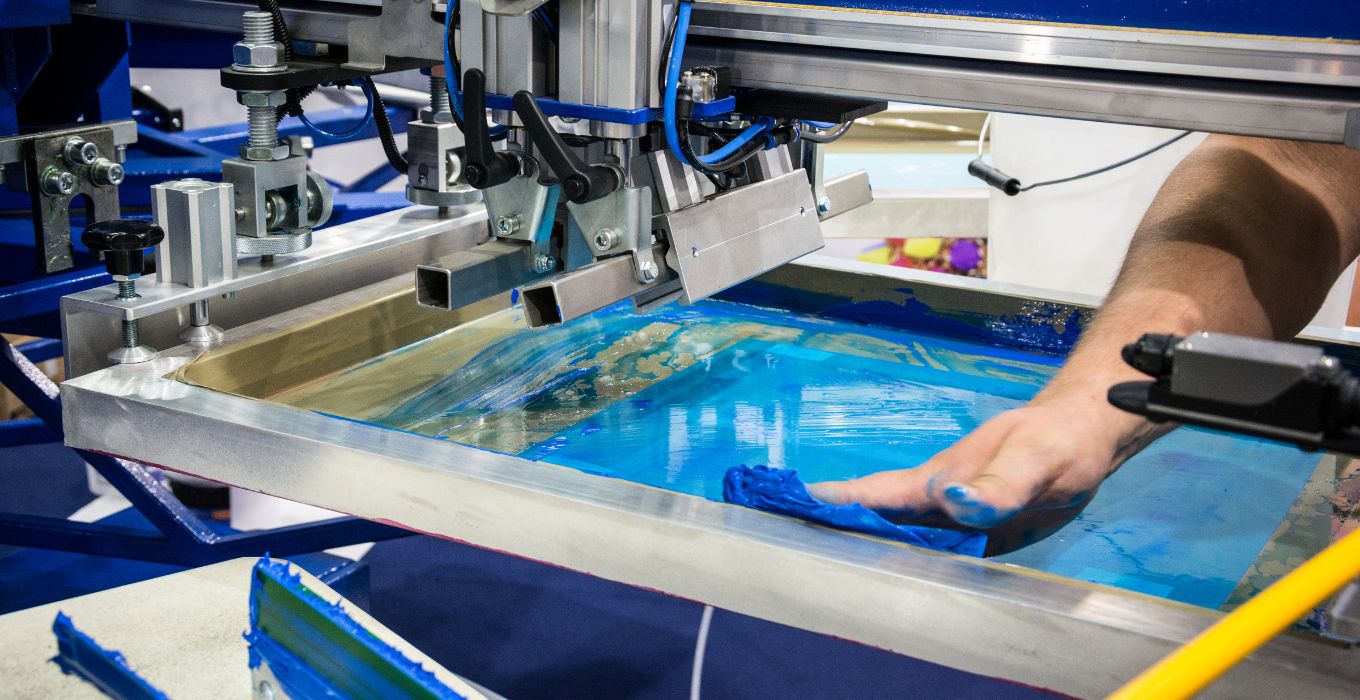
The term "serigraphy" comes from the Latin "sericum" ("silk") and from the Greek "γράφειν" ("gràphein", "to write"), and is a printing technique in which the design, applied to a gauze that has a upper photosensitive layer, it is illuminated with ultraviolet rays, then the gauze is rinsed to remove the non-illuminated parts and placed over the object to be printed, finally the ink on the gauze is pressed onto the object to transfer the image.
Screen printing is a technique that can only be used on flat surfaces, for most items you can print in one or more colors, in particular it is used to customize fabrics and nylon products such as: umbrellas and bags. Furthermore, it represents the main printing technique used on an industrial and commercial level as it is fast, fast, performing and extremely versatile. This technique can in fact be applied to any surface and material and is particularly used to reproduce images or for the "branding" of T-shirts, shopping bags and clothing.
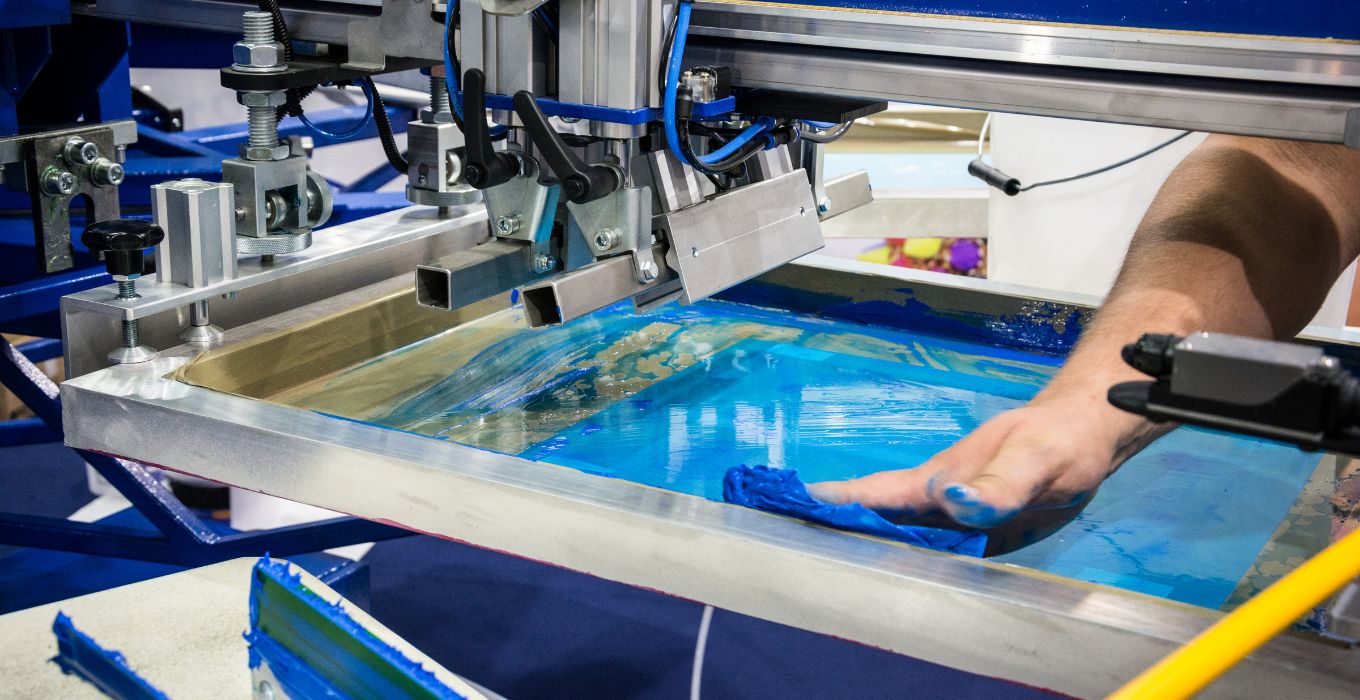
Screen printing or silk-screen printing is a permeographic printing technique that today uses as a matrix a polyester fabric, a steel fabric or a nylon fabric stretched over an aluminum, painted metal or wood panel called "screen printing framework" or " screen printing frame "or also called" screen printing fabric "or" screen printing fabric ".
General informations
From the print file of the logo to be reproduced, as many films are created as the colors to be reproduced, each film will allow to engrave, through a photoengraving process, as many frames as the colors to be printed. The frames are positioned on a special printing machine (Carousel) and each loaded with the desired color, then in sequence they are lowered onto the product to be printed so as to transfer the ink of the desired color by pressure only through the micro-holes previously created at the chassis.
In screen printing, each color will correspond to a frame then to make the final print the various colors will be printed in sequence, drying them one by one after each print, so the sum of the individual prints will form the desired image.
- Maximum number of colors possible: up to 8 distinct colors can be printed.
- Implants and support materials: film and frame (one for each single color)
- What determines the cost of printing: in addition to the cost of printing, screen printing has a fixed cost for the realization of each single frame (one for each single color): for small productions it may be less convenient than direct digital or transfer printing
- For which products is this print used : Screen printing can only be used on flat surfaces. Any textile product, nylon: t-shirts, shoppers, bags, caps, various clothing, umbrellas, plaques, stained glass windows, mirrors, labels, paper, curtains and outdoor cloths, etc.
Warnings: The printed colors may be slightly different from the expected pantones due to the background color of the product. It is quite difficult to obtain a perfect match between the colors, i.e. a strictly registered print. Mostly, very minute details cannot be printed.